Friday, January 22, 2016

Wesleyan Church Planting Resources

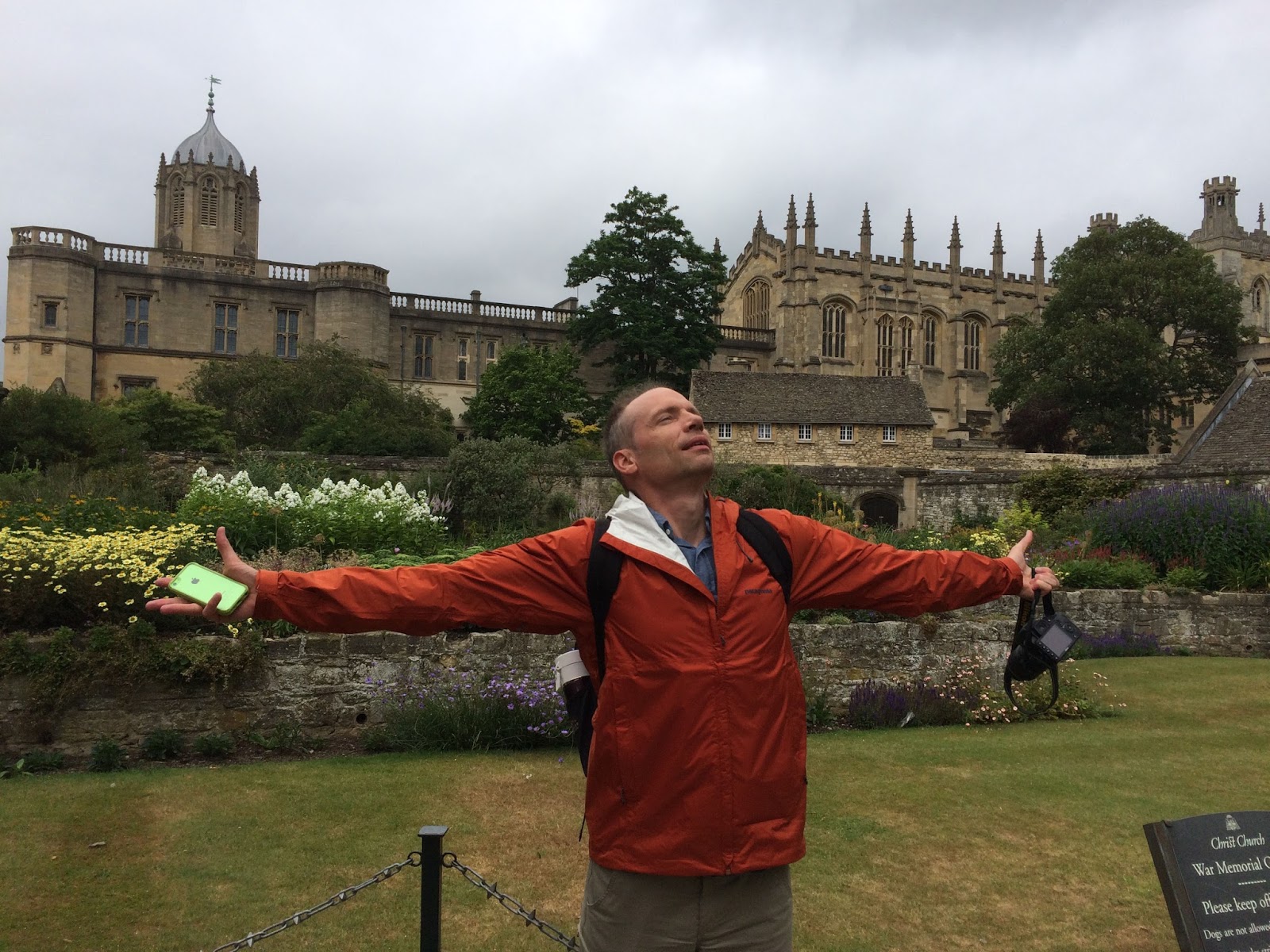
 (Pictured here is Christopher Coon, writer of Failing Boldly, one of 4 new books in production for Path1)

I am so excited about publications in process through Path1's "Wesleyan Church Planting Resources." We have four books in production with more on the way after that. Here is a listing of what's coming:


  1. Flipping Church, edited by Michael Baughman, founding pastor and curator at Union--a Coffee House/Church in Dallas, Texas. Mike's book includes contributions from a number of church planters from around the county, including a foreword by Kenda Creasy Dean and Mark DeVries (Church Cartographers) and chapters by Michael Baughman, Trey Hall, Amanda Garber, Matt Miofsky, Owen Ross, David Rangel, Olu Brown, Elaine Heath, Doug Cunningham, Derek Jacobs, and Jerry Herships. These writers will show us how new church starts are turning conventional wisdom about the church upside down.  
  2. A Missionary Mindset: What Church Leaders Need to Know to Reach Their Community--Lessons from E. Stanley Jones. With so many non religious and nominally religious people living in our communities, being in ministry feels a lot like being a missionary in a foreign land. Why not draw wisdom from the best of missionary practice to learn how to reach a non-Christian context? We draw upon E. Stanley Jones who worked among the people of India for 60 years as well as other missionary experiences.   
  3. Planting and Multiplying African American Churches, edited by Candace Lewis and William Chaney. Learn wisdom and best practices from exciting church planters working among African Americans. 
  4. Failing Boldly, by Christopher Coon, a co-founding pastor of Urban Village in Chicago. He tells the story of how failure can be the stepping stone to insightful progress in reaching new people with the gospel. 
These books will be valuable resources to fuel the new church movement in the United States. I'll be sharing more details and publication dates in future blogs.

Wednesday, January 20, 2016

(Not so) Snowed In

It's been almost three years since I moved to Nashville, Tennesee. One thing I've learned is that iced road surfaces are more dangerous than snow. Today we had both and many offices, including mine, were closed for the day. Not much snow fell, but the moisture coming from the southwest hit cold air from the north and put down a nice layer of ice on the roads. Better safe and at home than sorry on the road. So today I am working on several writing projects and plans for the year. I'm especially excited to be in touch with two young pastors who are doing great ministry and who are writing about it. I'll let you know more once we have more time to discuss things.

For now, I wish for you a safe and dry day!

Tuesday, January 19, 2016

Humility and Braggadocio


Stephen Cherry, dean of King’s College in Cambridge, England, and an Anglican priest, is the author of several books, including Barefoot Disciple, which unpacks what it means to embrace humility today. Cherry talks about humility as the behaviors, attitudes, values, and practices we incorporate into our being that lead us to live more like Jesus. Humble followers of Jesus make God real to others.[i]
 

Of course the irony of “humility” is that once you claim to have it, you don’t have it. It is a most difficult subject to write or talk about. Cherry contends, “We cannot make ourselves humble . . . we should aspire to humility.”[ii] It seldom comes to those who seek it. Rather, it flows from one’s character.

Church leaders who have a missionary mindset and want to reach their communities for Christ give honor to the gospel when they aspire to humility. We live in the age of “the selfie,” when so much attention is directed to ourselves. Moreover, our culture broadcasts the braggadocio behavior of celebrities and politicians as if that were something to aspire to. 

Why not aspire to humility?


[i] Stephen Cherry, Barefoot Disciple: Walking the Way of Passionate Humility (London: Continuum, 2011), p. 39.
[ii]Ibid p. 42.

Monday, January 18, 2016

I remember January 1968


I remember participating in a peace walk in Newark, New Jersey, in January (or was it February?) of 1968. I was a teenager at the time. My home church, the Chatham United Methodist Church (Chatham, New Jersey), had invited people to participate. I went with several others who gathered in the church parking lot and we drove together. The summer before Newark--like most major cities in the United States--erupted in riots that resulted in buildings burned down and stores and homes destroyed. There had been pent-up frustration at the lack of progress in civil rights. Pent up frustration for a lot of reasons. This march in Newark would be in solidarity with the people of Newark. It would bring people together, black and white, to walk through the neighborhoods most affected and give witness to a new day, to the hope of rebuilding and to the ongoing effort to bring about human and civil rights for all.

As we arrived and began to gather together to begin the march, a rumor circulated that Martin Luther King, Jr. would come and join us. He did not come, but I remember how excited we were at the prospect. It energized just to think that he might be there.

The march went well. It was peaceful and there were many people from all over the state who joined together. I remember seeing my speech teacher among fellow marchers. She went to a different church but we saw each other and even walked together for a while. I gained newfound appreciation for Mrs. Tousley that day that lasted the rest of my high school years. 

Only a few shorts weeks later, Martin Luther King went to another city to participate in another march in solidarity with workers. That would be his last. 

I'll never forget that day in Newark and the the feeling that I might get a chance to see him, even walk with him. I am so glad there is a day set aside to remember.

Sunday, January 17, 2016

Remember The Dream

I was twelve years old and watched King give the speech live on television as so many other Americans did that late August day of 1963. Having grown up in a mostly homogenous town that speech influenced me more than any other speech of my lifetime. It is not only worth listening to again, but worth living up to and sharing with others: Listen and watch again.

Saturday, January 16, 2016

E. Stanley Jones and Martin Luther King, Jr., Part 2

Anne Mathews-Younes, the grand-daughter of E. Stanley Jones related to me the story of when her mother, Eunice Jones Mathews (the daughter of E. Stanley) visited the Martin Luther King, Jr. Center in Atlanta, Georgia. A copy of Jones' book, Gandhi: Portrayal of a Friends (Abingdon, 1948) was in the MLK,Jr. Library. In King's personal copy of the book are these lines handwritten in the margin:  "This is it! This is the way to achieve freedom for the Negro in America." 

There is no question that Martin Luther King, Jr. was influenced by the writings of E. Stanley Jones and his unabashed pursuit of peace through non-violent means. During this weekend, let us remember the values that King and Gandhi stood for in their leadership. There is an invitation here for all of us to embrace diversity, love of our neighbor regardless of race, class, sexual orientation or religion and an invitation to be in conversation with our neighbors about the issues of the day.

Friday, January 15, 2016

E. Stanley Jones and Martin Luther King, Jr., Part 1


Photo of E. Stanley Jones, reprinted with permission of the Jones' Family
Published in 1944, E. Stanley Jones' The Christ of the American Road laid out what the United States needed to do in order to live out the promise of the Reign of God. Among other subjects, it addressed head-on the sin of racism in the U.S. Drawing upon his friendship with and knowledge of Mahatma Gandhi, Jones outlined a way in which Christians—both black and white—could put an end to the insidious racism in the country. He advocated for educating the populace that the words of the Declaration of Independence—“liberty and justice for all”—mean for all. He called for a nationwide curriculum in public schools on race appreciation. He called on Christian churches to welcome persons of other races into membership. He called for a nationwide campaign to do away with discriminatory laws. If all of these actions failed to bring an end to racism, Jones wrote:

Then [African Americans], probably joined by whites, may have to resort to nonviolent non-cooperation by picking out certain injustices and then, through volunteers trained in nonviolent methods, refusing to obey these specific injustices and taking the consequences of that civil disobedience. This would be an appeal to the conscience of the country. [i]

I was stunned when I first read those words. He wrote this in 1944! He foretold the coming Civil Rights movement in America and the non-violent methodology that Martin Luther King, Jr. embraced.


[i] E. Stanley Jones, The Christ of the American Road, p. 180.